
As millions of Americans struggle to put food on the table, over a third of the country’s food supply goes uneaten. Researchers have tracked these metrics for decades, but the numbers remain stagnant despite growing efforts in public awareness.
Food waste costs the United States an estimated $218 billion annually, according to the Environmental Protection Agency. Yet, nearly one in eight households experiences food insecurity. The disconnect is especially visible in public schools, where meals designed to nourish children often end up in the trash. In Memphis, local nonprofits and educators are testing whether simple, low-cost interventions can cut food waste and nourish more children at the same time.
Working alongside Memphis-Shelby County Schools, the nonprofit Clean Memphis partners with the Natural Resources Defense Council and the World Wildlife Fund to pilot a suite of school-based programs aimed at reducing food waste by redirecting edible food and teaching students how food systems work. The program is in its early days, but organizers are already seeing evidence that it’s cutting waste and increasing food access.
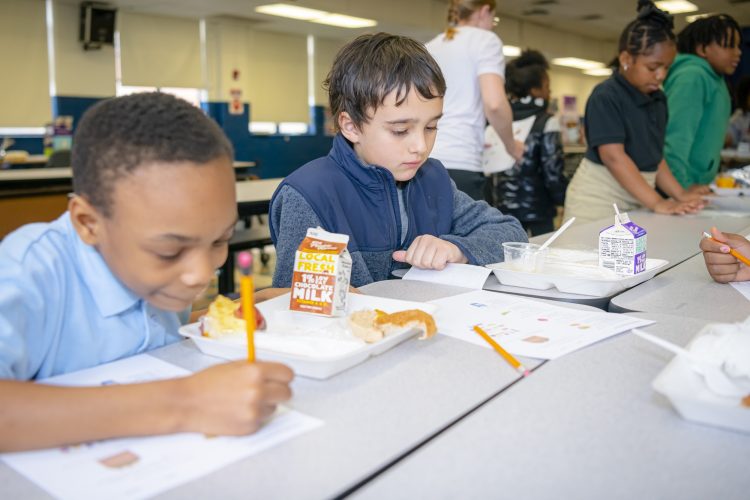
Through the National School Lunch and School Breakfast programs, students can receive two low-cost or free meals each school day based on household income or enrollment in other federal assistance programs. The programs are of particular importance in Memphis, where almost 39 percent of children live in poverty and many rely on schools for their only consistent meals. But things like rigid federal serving requirements, short lunch periods, and confusion over regulations still drive a high level of food waste that could otherwise fill student’s bellies.
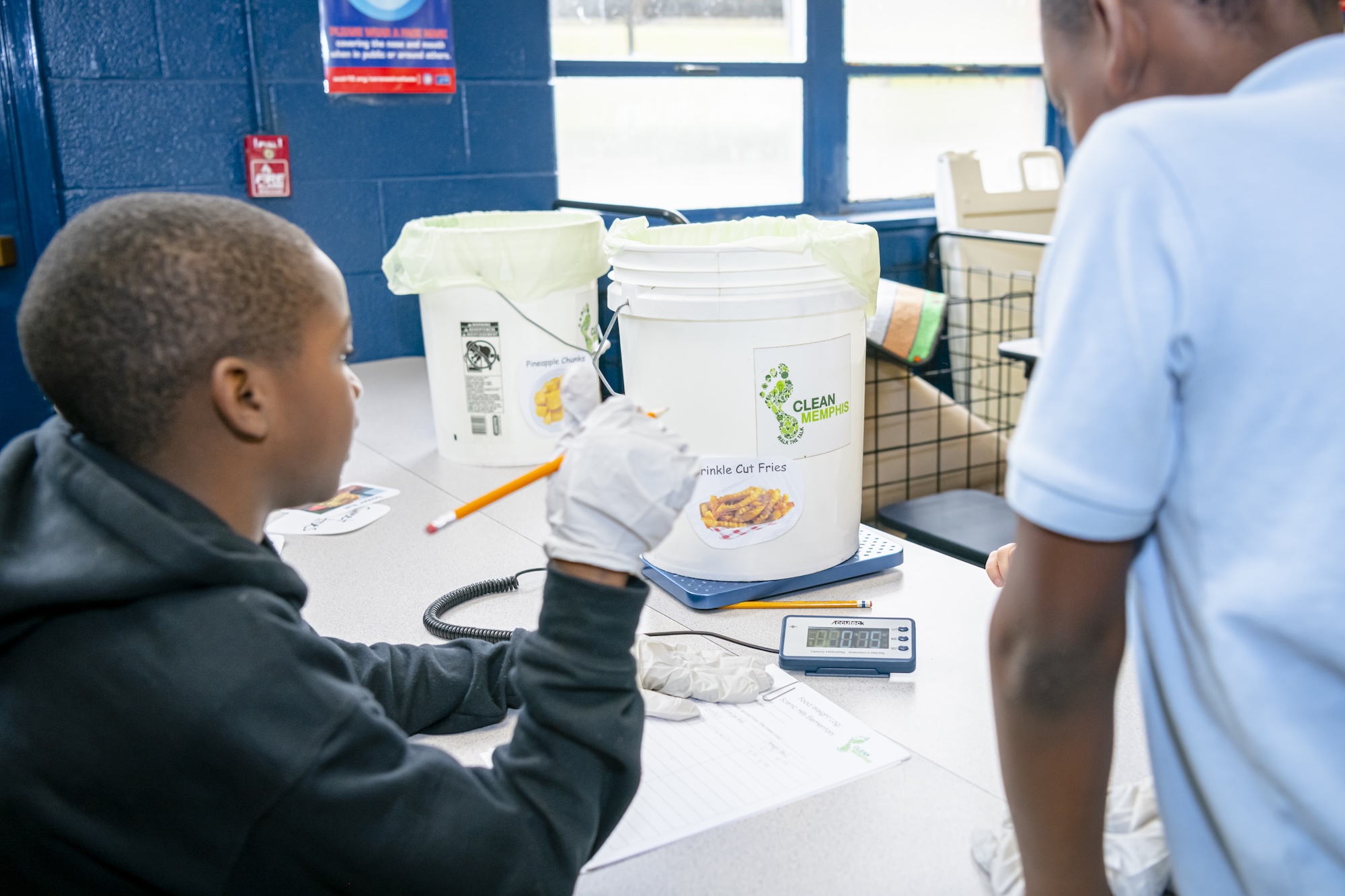
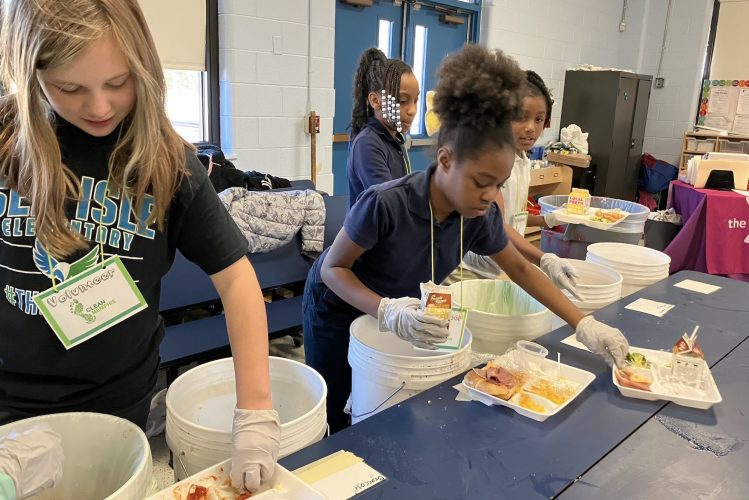
Clean Memphis launched its school food waste program in 2019 by conducting waste audits in which fourth grade classes at participating schools literally counted what their peers threw away. One culprit was immediately obvious: unopened milk.
“During one audit, we counted more than 100 unopened milk cartons left over from a single meal period,” said Michelle Cowan, Clean Memphis’ director of education and community impact. “That told us something was broken in the system.”
Under federal Offer Versus Serve rules, students are allowed to decline various components of their meals, including milk. Bu that rule isn’t often reflected in practice. Many cafeteria monitors and students believe that taking milk with your lunch is mandatory. “That misunderstanding alone was driving enormous waste,” Cowan said.
Clean Memphis worked with Memphis-Shelby County Schools nutrition staff to reinforce what federal rules actually allow. The team then informed staff, teachers and students, emphasizing that taking milk is optional and declining it is permitted. The results were immediate. Unopened milk waste dropped by about 75 percent across participating schools, Cowan said.
To catch even more food waste, Clean Memphis introduced share tables at 10 schools. Students can place unopened, uneaten food items — such as milk cartons, fruit cups and packaged snacks — on a designated table and take other items they want. The tables operate only during meal periods and are supervised by adults. Beyond reducing waste, they allow students who are still hungry to take additional food.
While the share tables allow direct access to packaged foods, prepared foods cannot be reused this way. To help reduce prepared food waste, Clean Memphis helped establish a back-of-house donation system.
Using a digital platform called Careit, schools can log surplus food to make it available to local a network of about 90 food rescue groups across Memphis and Shelby County. This also gives schools flexibility in how surplus food is used. Some schools make food available to students as they leave for the day, others install refrigerators where students can access food between classes and some offer it to Careit.
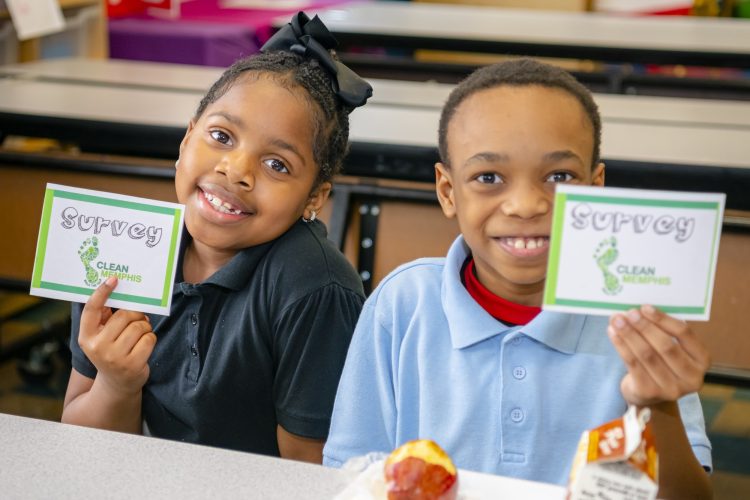
Education is the backbone of each part of the initiative. Clean Memphis integrated food waste lessons into the fourth-grade curriculum at partner schools, for example. Students analyze their own data, turning math and science lessons into a toolkit for social change.
“We want students to understand systems,” Cowan said. “This means where food comes from, what happens when it’s wasted and how their choices matter.”
The challenge now is growth. Memphis-Shelby County Schools is one of the 25 largest districts in the country with schools spread across a massive geographic area, and Clean Memphis is running on a four-person team. “This is absolutely scalable,” said Nefertiti Orrin, president and CEO of Clean Memphis. “But it’s also capacity-heavy. ”
Organizers hope the district will eventually invest directly in scaling the program. “If we can make this work here, we can make it work anywhere,” Cowan said.