

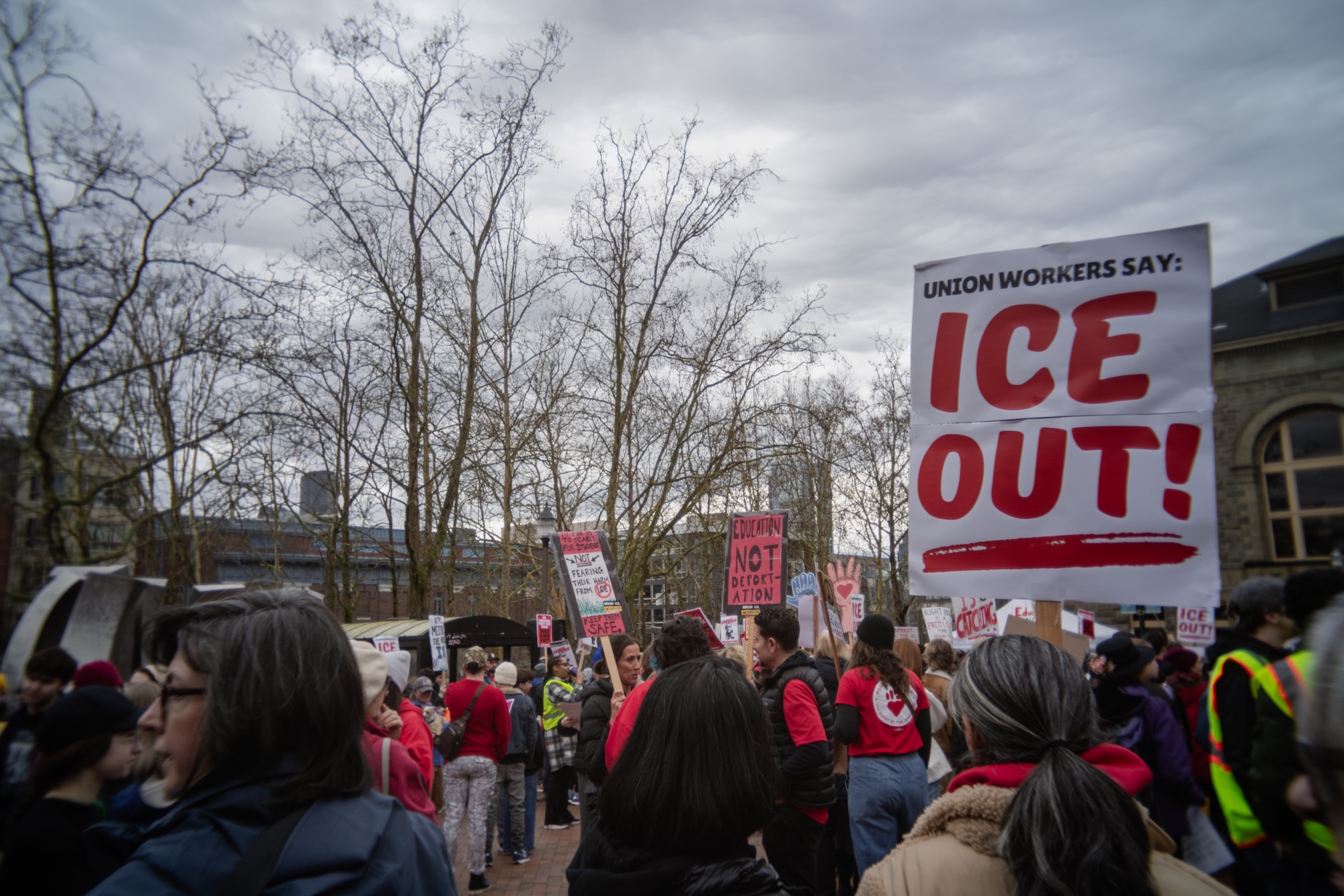

Over the past 12 months, U.S. President Donald Trump’s immigration enforcement policy has revealed itself as a chaotic spiral of civil rights abuses and violence to the point of lethal consequences, sparking mass protests across the country. So far, most business leaders stayed quietly in the background, but some in the real estate industry are beginning to draw the line — joined by residents and lawmakers whose communities refuse to participate in the president’s plan to establish concentration camps across the country.
The U.S. government wants to use billions in taxpayer money to buy up warehouses for ICE
The U.S. Department of Homeland Security is planning to spend $38.3 billion in taxpayer money to acquire warehouses and industrial properties across the country and convert them into a “new detention center model” capable of holding almost 100,000 people, Axios reported on Friday.
“Under the Detention Reengineering Initiative, U.S. Immigration and Customs Enforcement (ICE) Enforcement and Removal Operations (ERO) will fully implement a new detention model by the end of fiscal year 2026,” DHS wrote in a Feb. 12 memo shared with New Hampshire Gov. Kelly Ayotte.
“This effort aims to meet the growing demand for bedspace and streamline the detention and removal process, focusing on non-traditional facilities built specifically to support ICE’s needs,” DHS elaborated.
The new “model” includes buying up properties to convert into eight “large-scale detention centers” and 16 “processing sites.” DHS also aims to buy 10 facilities where ICE already conducts operations, according to the memo.
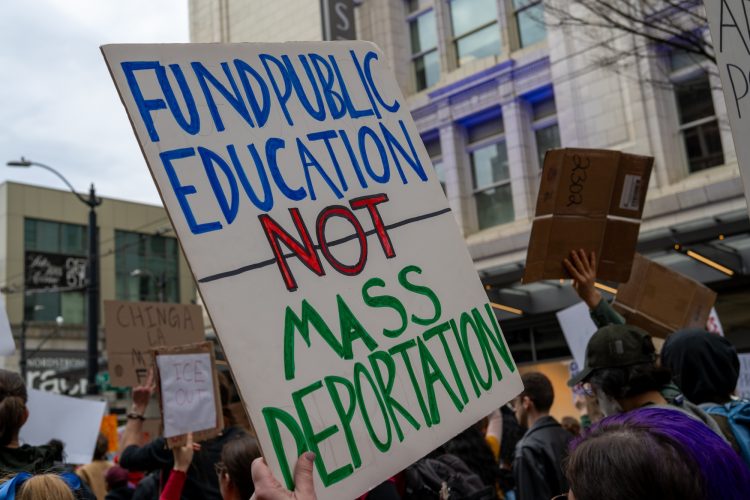
With abuse in existing ICE facilities already well documented, plans for a “new detention model” rattle communities
If there is an appropriate word for housing thousands of traumatized adults and minors at various stages of mental and physical health in a windowless warehouse, with little or no access to appropriate healthcare and nutrition, “new detention model” hardly describes the reality of the situation.
Human rights organizations have documented cruelty, torture and abuse at existing DHS detention facilities, where health risks include a recent outbreak of measles and at least one finding of homicide. Adding even more facilities simply compounds a situation that is already out of control.
As a reminder, Anne Frank did not die in the gas chambers at Auschwitz. Nor was she shot, strangled, stabbed or beaten to death in a concentration camp. In her final weeks of life, during the winter of 1944-1945, she and her sister Margot were transferred by train from Auschwitz to the Bergen-Belsen camp, where the conditions were dire. “There was little food, and the camp was filthy and crawling with vermin. Many prisoners fell ill,” the Dutch nonprofit organization and museum Anne Frank House recounts. “Margot and Anne Frank contracted spotted typhus and died in February 1945.”
More than 80 years later, the prospect of fostering such human misery in a network of American concentration camps has motivated local residents and office holders to take action.
In one recent example, community meetings in the village of Chester, New York, have been packed to capacity and local officials are preparing to take legal action after ICE announced that it purchased a former Pep Boys warehouse for conversion into a detention center with a capacity of 1,500 people.
The local news organization Monroe Gazette spotted word of the transaction early last month. Since then, NBC News and other national media have picked up the story.
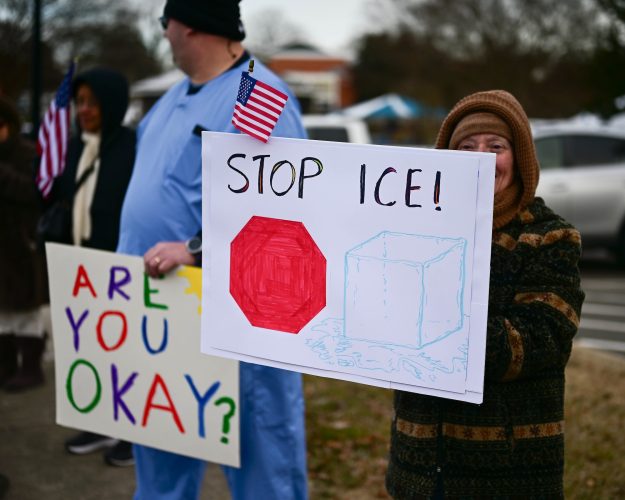
Property owners and communities take action
The deed for the Chester purchase has not been officially transferred to ICE as of this writing. The current owner of the property has been identified as IEP Chester LLC, a subsidiary of Icahn Enterprises, a firm controlled by the well-known activist investor Carl Icahn.
Today, ICE was forced to retract its prior statement that the agency had purchased the warehouse, calling it a “mistake,” though it’s not clear if the Chester warehouse is still under consideration, local news outlets reported.
Elsewhere around the country, property owners have similarly decided they want no part of the ICE concentration camp business.
In Kansas City, the developer Platform Ventures put out a statement saying it would not sell a warehouse it owns to ICE. The company claims it was approached by a third party about the sale and entered negotiations, only later learning that the buyer was the U.S. government.
“While typically we do not comment on potential transactions, baseless speculation, inaccurate narratives, and serious threats toward our leadership, our employees and our families have prompted us to issue this statement,” Platform Ventures wrote, as reported by NPR’s affiliate in Kansas City last week.
In the town of Hutchins outside Dallas, Texas, DHS approached Majestic Realty to purchase a 1-million-square-foot warehouse, with plans to convert it into a detention center capable of holding up to 9,500 beds. The company’s owner, billionaire Trump donor Edward Roski Jr., said he turned them down, Forbes reported.
“Majestic Realty Co. has not and will not enter into any agreement for the purchase or lease of any building to the Department of Homeland Security for use as a detention facility,” the company said in a statement.
In other states, lawmakers are moving to block ICE detention centers from their districts in response to packed council sessions and public pressure. Just outside Detroit, Romulus Mayor Robert McCraight said the city will oppose any planned detention center after ICE purchased a facility without informing local officials.
“Shame on the federal government for planning in secret and coming to our community without notifying anyone at the Congressional, state, or local level,” Michigan state Rep. Dylan Wegela wrote on Facebook on Friday.
Pennsylvania lawmakers including Gov. Josh Shapiro said the state will refuse permits for two reportedly planned facilities that would exceed local water and sewage capacity. “If reporting about DHS’s plans is accurate, the facilities will violate legal requirements applicable to public drinking water, sewage and water pollution,” the officials wrote in a letter to Homeland Security Secretary Kristi Noem on Thursday. “State authorities will not issue required permits that would violate these legal requirements.”
An existing ICE detention center in Pennsylvania has a documented history of abuse, and opposition to new ICE presence crosses party lines. “As a neighbor, as a resident of the township, we don’t have the capacity to deal with this,” one resident told the local news outlet SpotlightPA. “We’re all in favor of criminals coming off the streets, but when they’re coming to arrest a neighbor whose skin is a little darker than mine? This isn’t the America I grew up in.”
Image credits: Michael Hanscom/Flickr (1 & 2) and Anthony Crider/Flickr


