
Feeding the future is one of the world’s toughest challenges. Today, over 8 percent of the global population is malnourished, according to the World Health Organization. Experts expect demand for protein to nearly double by 2050 as the population approaches 10 billion, making food security an urgent concern.
Fertile land and freshwater — the foundation of agriculture — are becoming scarce. Agriculture today consumes 70 percent of global freshwater, according to the United Nations. And 90 percent of the world’s soils could be degraded by mid-century if current practices continue. At the same time, livestock production accounts for over 14 percent of greenhouse gas emissions, but plant-based alternatives often come with trade-offs in nutrition, functionality or scalability.
Arborea, a London-based sustainable food startup, believes one of Earth’s oldest organisms could offer a way out: microalgae.
“When we look at a protein, what do you want from a protein?” said Kaly Chatakondu, Arborea’s global commercial director. “You obviously want the taste and the functionality … You need the sustainability … You need nutrition from the protein. The thing that we like about microalgae, and the way we make our microalgae, is that we actually answer all three questions for the very first time.”
Microalgae are tiny plants that live in water. They are so small you can’t see them without a microscope. Even though they’re tiny, they’re very powerful. Microalgae make oxygen and are full of nutrients like proteins, vitamins and healthy fats.
A familiar microalgae is spirulina, which is often sold as a dark green nutritional supplement powder. Research shows spirulina can be up to 70 percent protein by dry weight. And it contains all essential amino acids, just like animal proteins.
The challenge with microalgae is that it’s difficult to grow in a safe and affordable way for eating. Normally, it is grown in open ponds or in special glass tubes. Open ponds can be cross-contaminated easily by other algae, animals, or even heavy metals from the environment, Chatakondu said.
In tubes, the oxygen created by the algae through photosynthesis can harm the algae itself. “Microalgae likes to kill itself,” Chatakondu said. “The byproduct of microalgae is oxygen. And too much oxygen is toxic to the microalgae.”
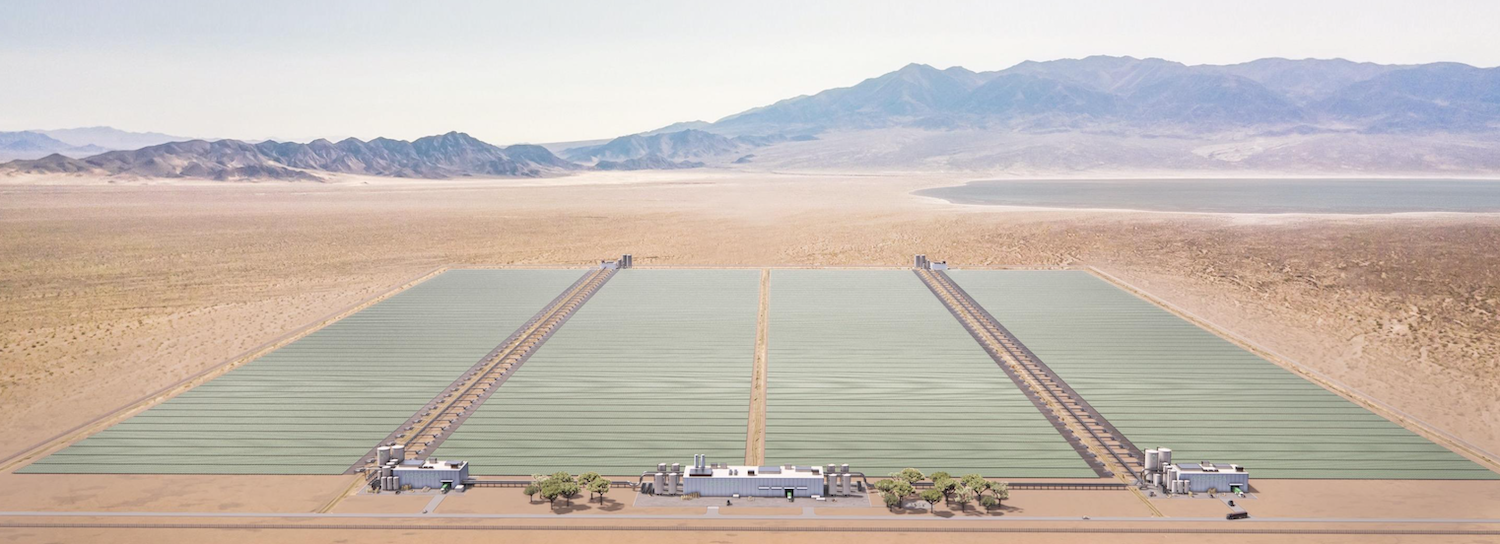
The Arborea growing system tackles all of those issues, Chatakondu said. “It is outdoors, but it’s enclosed and controlled. It’s on non-fertile land, and it uses minimal freshwater. Now you can make unlimited quantities of any microalgae.”
The startup’s breakthrough is what it calls “breathing cultivation tubes,” designed to manage the issue where oxygen kills the algae.
“The tubes we grow them in breathe in carbon dioxide — which helps the microalgae grow — and breathe out oxygen,” Chatakondu said. “They do it so efficiently that you can just keep growing that microalgae without it killing itself, as the tubes let out the oxygen before affecting the microalgae.”
Soy, the world’s most widely cultivated protein crop, yields around 1 to 3 tons of protein per hectare. Arborea claims its system can yield 100 tons per hectare, more than 30 times higher.
“The potential is huge because, numerically speaking, if you took a land area the size of New York City, you could grow as much protein there with microalgae as the entire continent of Africa grows with regular farming,” Chatakondu said.
That efficiency could make a meaningful difference for global food security. Today, more than 3 billion people cannot afford a healthy diet, according to the Food and Agriculture Organization.
Plus, Arborea says its system directly converts carbon into nutrition because microalgae consume carbon dioxide to create energy and grow — just like other plants. “Two tons of carbon dioxide can turn into 1 ton of food,” Chatakondu said.
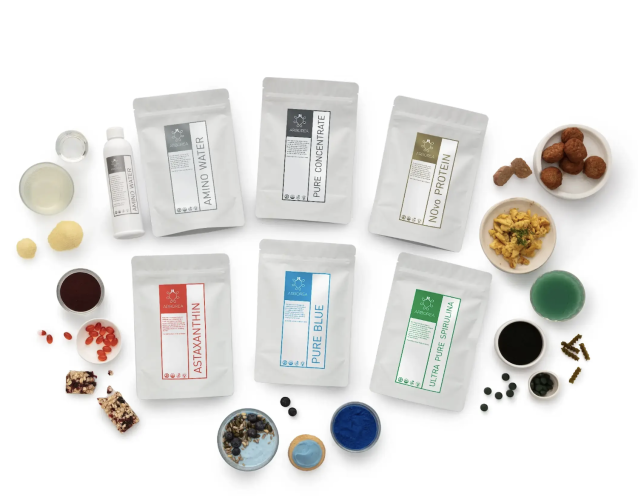
Arborea’s tubes currently produce three main products: a water-soluble white protein powder, a green spirulina powder for smoothies and supplements, and natural blue colors for foods and beverages.
The startup supplies ingredients to large food companies from its pilot production facility in Lisbon, Portugal, Chatakondu said. It expects to reach full-scale production and produce hundreds of tons of ingredients by the end of 2026.
Scaling the operation is not just possible but also financially viable. “We have demonstrated that the facility will pay for itself within three years,” he said. The alternative protein market is projected to reach $290 billion by 2035.
But it wasn’t easy to get here, Chatakondu said. “This took years of research to get to this point — 50 patents, eight years of research,” he added. “We only started commercializing in January of this year.”
Future expansion plans will target regions where food security challenges are most severe. “Some of the best places for it are actually in the Middle East, because 85 percent of food is imported,” Chatakondu said. “Another important area is Asia, where the ratio of the number of people to the amount of fertile land available is totally out of whack.”
For Arborea, the endgame is not to replace agriculture but to complement it. “This is working hand in hand with the agricultural community,” Chatakondu said. “With this method, they can use their non-fertile land and create a product that will help regenerate their soil as well. I think the future will actually be the synergy between different proteins. It’s not going to be one or the other.”
Microalgae is not yet a mainstream food source, but Arborea’s pilot shows it could deliver serious protein yields while using less land and water. If scaled successfully, it may become a powerful tool for tackling food insecurity and climate change at the same time.
Editor’s note: An earlier version of this story referred to Arborea as a Portugal-based startup. Arborea is a London-based startup with a production facility in Portugal. We regret the error.