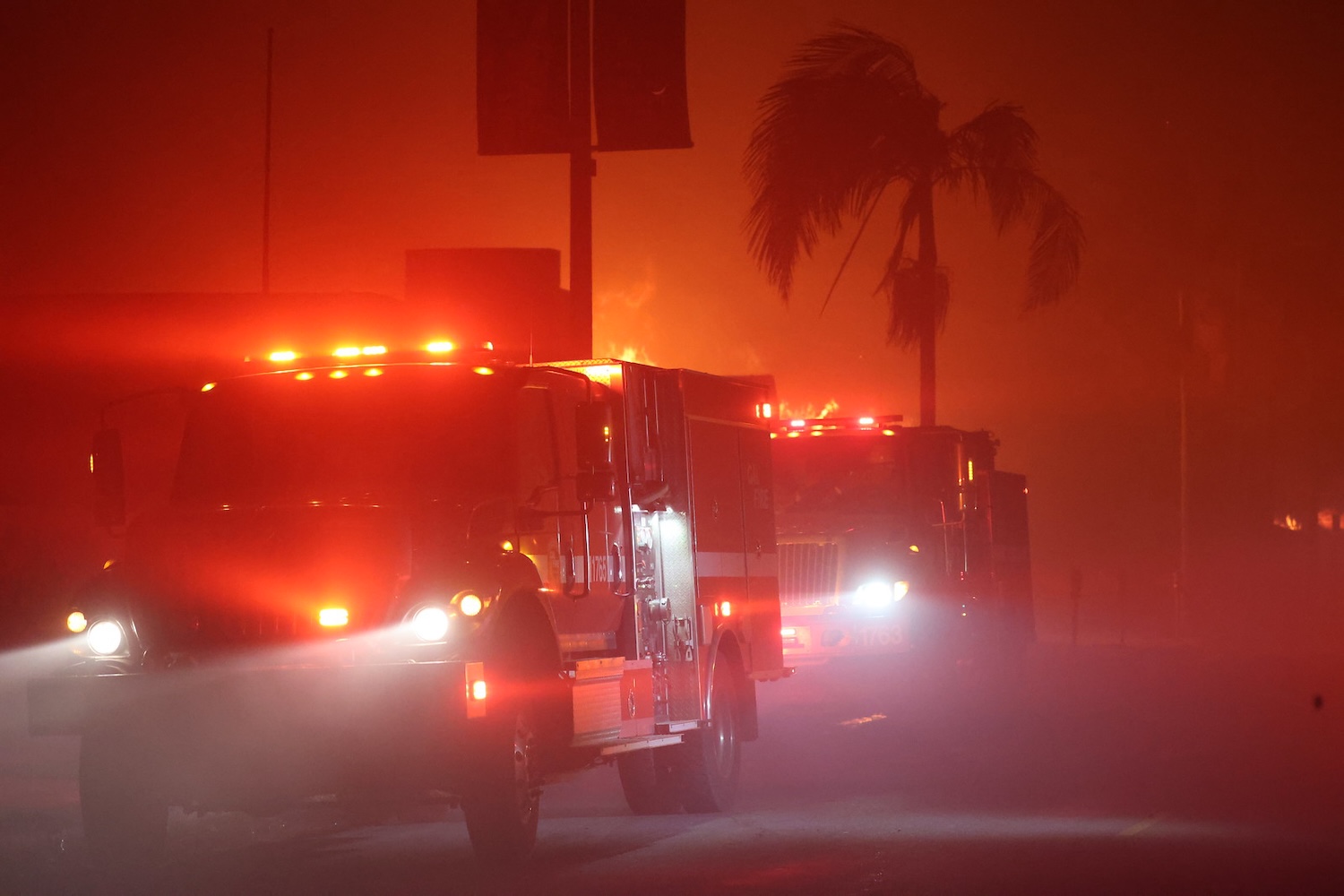

Incarcerated people in California have lived at fire camps in the forest since the 1910s, fighting fires side by side with the rest of the state’s force. In 2024, incarcerated fire crews were responsible for 42 percent of California’s total emergency response hours, the highest ever recorded by the California Department of Corrections and Rehabilitation. Yet until last year, California’s incarcerated wildland firefighters earned $5.80 to $10.24 per day — often less than a dollar an hour — while working and training, according to the department. When responding to active emergencies, they received just $1 per hour more.
The state has come to rely on the critical support of incarcerated firefighters, especially with the increasing frequency and severity of wildfires in California, but the program has long raised ethical concerns. Those advocating for higher wages for incarcerated firefighters had not made much progress until recently.
A California law (AB 247) enacted in October ensures that incarcerated people on firefighting crews are paid the federal minimum wage of $7.25 per hour when assigned to an active incident. Assembly member Isaac Bryan, a Democrat from Culver City who authored the bill, initially pushed for $19 per hour, as earned by entry-level firefighters with the California Department of Forestry and Fire Protection (CAL FIRE). Nonprofits like the Center for Employment Opportunities, labor unions and celebrities rallied behind him in the push to pay incarcerated firefighters fairly.
While negotiations ultimately landed on using the federal minimum wage, Bryan still called it a momentous achievement. “The governor signing the bill is an incredibly powerful reminder that all labor is dignified and anybody who is willing to put their lives on the line deserves our gratitude,” he told CalMatters.
Advocates have called it a bittersweet victory.
It means the fight for fairness and more equitable conditions for incarcerated firefighters will go on, said Simone Price, director of organizing for the Center for Employment Opportunities, a nonprofit that provides services and advocates for people recently released from incarceration.
“This past year created a lot of very overdue attention and a need to demonstrate that this is a job that is dangerous and necessary, and that folks who are incarcerated working alongside other firefighters should be doing a little better than five dollars a day,” Price told TriplePundit.
The devastation of the 2025 wildfire season, including fires in Los Angeles among the worst in the state’s history, had the unexpected result of shining a light on the huge portion of firefighters who are incarcerated, Price said. “It made a big difference for a lot of folks who maybe weren’t aware of this situation or taking it as seriously as they should have,” she added.
The program has historically recruited volunteer inmates from state prisons. For many, firefighting is a source of pride and a career opportunity. “In our advocacy work, there’s a lot of respect for these firefighters,” said Price. “Sometimes it was their first job because of how young a lot of us are when we are first incarcerated. It took a lot of dignity to be able to provide that service, and it’s a skill they want to continue to provide on the outside.”
In 2021, AB 2147 went into effect to help make that possible. The California law enables people who participated in California Department of Corrections and Rehabilitation firefighting efforts to have their records expunged, removing a barrier to seeking firefighting jobs in their communities.
The bill made a big difference to those in prison serving on the firefighting crews, Price said. But in practical implementation, formerly incarcerated firefighters continue to face barriers to employment in the field.
“It paved the way for a limited pool of people to potentially go through the course to have their records expunged and perhaps qualify for the necessary certification and EMT certification to become a firefighter,” Price said. “But that’s been very difficult. It’s not a seamless process.”
One of the limitations of AB 2147 is that it only applies to those who served in a firefighting role at the state level through CAL FIRE. “Unfortunately, most of these jobs are at the county level,” Price said. “But we’re hopeful that the legislative wins we are having now will create a bigger pathway for actual job opportunities for folks who want to continue to be firefighters.”
Alongside pay and opportunity barriers, incarcerated firefighters face daily risk of injury. As several studies have documented, including a 2025 investigation by Georgetown Law, incarcerated firefighters have no equivalent pension or health benefits yet are more likely to suffer injuries and to find conditions for medical treatment limited.
Sergio Maldonado, a formerly incarcerated firefighter who is now an advocate with the Center for Employment Opportunities, was injured while fighting fires. But he said he doesn’t regret firefighting.
“Standing shoulder to shoulder with my crew, facing walls of flame that seemed impossible to overcome, I found something I never expected in prison: pride in protecting communities and saving lives,” Maldonado said in a statement. “AB 247 recognizes what I learned on the fire line — that our humanity and contributions matter more than our mistakes. The teamwork, discipline, and sense of accomplishment fostered personal growth and rehabilitation that traditional incarceration rarely provides. This firsthand experience underscores why fair compensation matters.”
Like Price, Madonado works to help people translate their firefighting skills to civilian jobs. The reality, however, is that even those who do find jobs as firefighters after incarceration are often paid less and face limited advancement opportunities compared to colleagues without criminal records, despite having the same experience. Earning higher wages while incarcerated can help them make restitution payments, support their families, and build savings essential for successful reentry.
Like a fire that’s still smoldering, advocates like Price and Maldonado continue to push for the comprehensive reform that will address all the systemic barriers preventing formerly incarcerated firefighters from pursuing careers in the field where they’ve already proven their capabilities and commitment.
Image credit: California Department of Forestry and Fire Protection/Wikimedia Commons