
The data center construction boom has swelled into a high-level political issue in the United States with the approach of the 2026 midterm elections. Hundreds of jurisdictions are restricting data center construction, citing environmental and public welfare concerns. That includes major cities, which are particularly exposed to the contribution of large data centers to the urban “heat island” effect.
Urban data centers and the policy vacuum
Data centers have been a common feature in the urban landscape for decades. Developers are attracted by existing infrastructure like power lines, water services and road access. The size of these earlier facilities is relatively modest, and so is their impact on surrounding neighborhoods. Most local zoning codes historically treated data centers as any other light industrial activity, without specific regulation.
Now, a new generation of hyperscale facilities is rising to meet the demands of AI computing. A single AI data center can use as much electricity as a small city, putting strain on local power grids and raising new public health concerns.
Urban policymakers across the United States are now trying to catch up to a situation that critics say has already spiraled out of control. “The development of these data centers has proceeded at a pace and scale that utility planning frameworks, regulatory structures, local approval processes, and community engagement practices were not designed to accommodate,” the nonprofit Bipartisan Policy Center warned in a 2026 report.

Cities take action, with mixed results
The consequences of the policy vacuum are evident in U.S. cities like Phoenix. Until last summer, Arizona was among the states offering substantial tax incentives to attract data center development, with the Phoenix metro area being a particular focus of activity.
More than 100 data centers are already operating in Phoenix, with nine under construction and 36 in the planning pipeline, according to the U.S. Data Center Map tracker. Phoenix has a “very high” risk for extreme heat waves in Federal Emergency Management Agency (FEMA) ratings and sits in a high water-stress area.
State policymakers passed a three-year moratorium on data center tax incentives beginning in July, but it touched off a sudden rash of applications before the effective date. State officials received 113 applications for tax incentives after the moratorium was signed into the state budget in June. In comparison, the same incentive program received a total of 123 applications in the previous 13 years.
Phoenix itself had no zoning ordinance specific to data centers until 2025 when the city council formally adopted new rules to establish zoning definitions and design standards. The rules require data center developers to obtain a special permit to build in certain districts, including consideration of noise limits and other performance standards.
Within months, Phoenix was faced with at least 11 landowners and developers demanding compensation for the lost value of their data center projects under Prop 207, a state law approved by voters in 2006 that allows landowners to sue cities or demand compensation if new zoning regulations harm their property values. The Arizona Republic calculated the total bill at $753 million. As a partial solution, Phoenix began negotiating waivers with some data center projects, enabling them to move forward.
The ordinance also does not impact projects in other cities in the metro area. The firm Aligned Data Centers, for example, acquired a property in Phoenix in 2022 but dropped plans for a data center there after the zoning ordinance passed. The company then filed plans with the nearby city of Peoria, less than 15 miles away, for a 95-acre data center in the city’s Legacy Point industrial zone, which allows warehouses, manufacturing, and large-scale water users without restriction.
The new Aligned facility will be Peoria’s first data center. City officials are now considering options for updating zoning rules and exercising some restrictions on new data centers, including larger setbacks from streets and property lines, landscape buffers, and third-party noise assessments. However, even if the new rules are approved, they would not necessarily apply retroactively to projects already in the planning stages.
The heat island factor
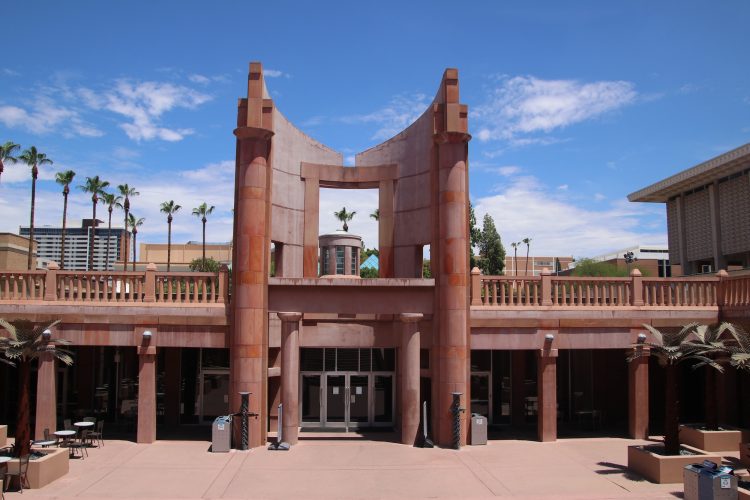
Due to their massive heat signatures, large-scale and AI data centers in the metro threaten Phoenix’s already precarious position as the hottest major city in the United States and a living example of the urban heat island effect.
“Phoenix has one of the largest urban heat island magnitudes in the world,” research from the climate office at Arizona State University finds. ASU researchers have been studying the urban heat island effect in Phoenix for nearly 30 years. Their most recent assessments found the temperature at Phoenix Sky Harbor Airport within the city limits is 10 to 14 degrees Fahrenheit hotter on average compared to smaller cities and towns less than 50 miles away.
Urban heat islands are typically caused by structures and pavement absorbing massive amounts of solar energy during hot days and slowly releasing it as heat, making the city far hotter than surrounding suburbs and rural areas. The effects are particularly strong in Phoenix, where the UV index regularly exceeds 11 during summer, but cities from New York and New Orleans to Houston and San Francisco also experience severe urban heat islands.
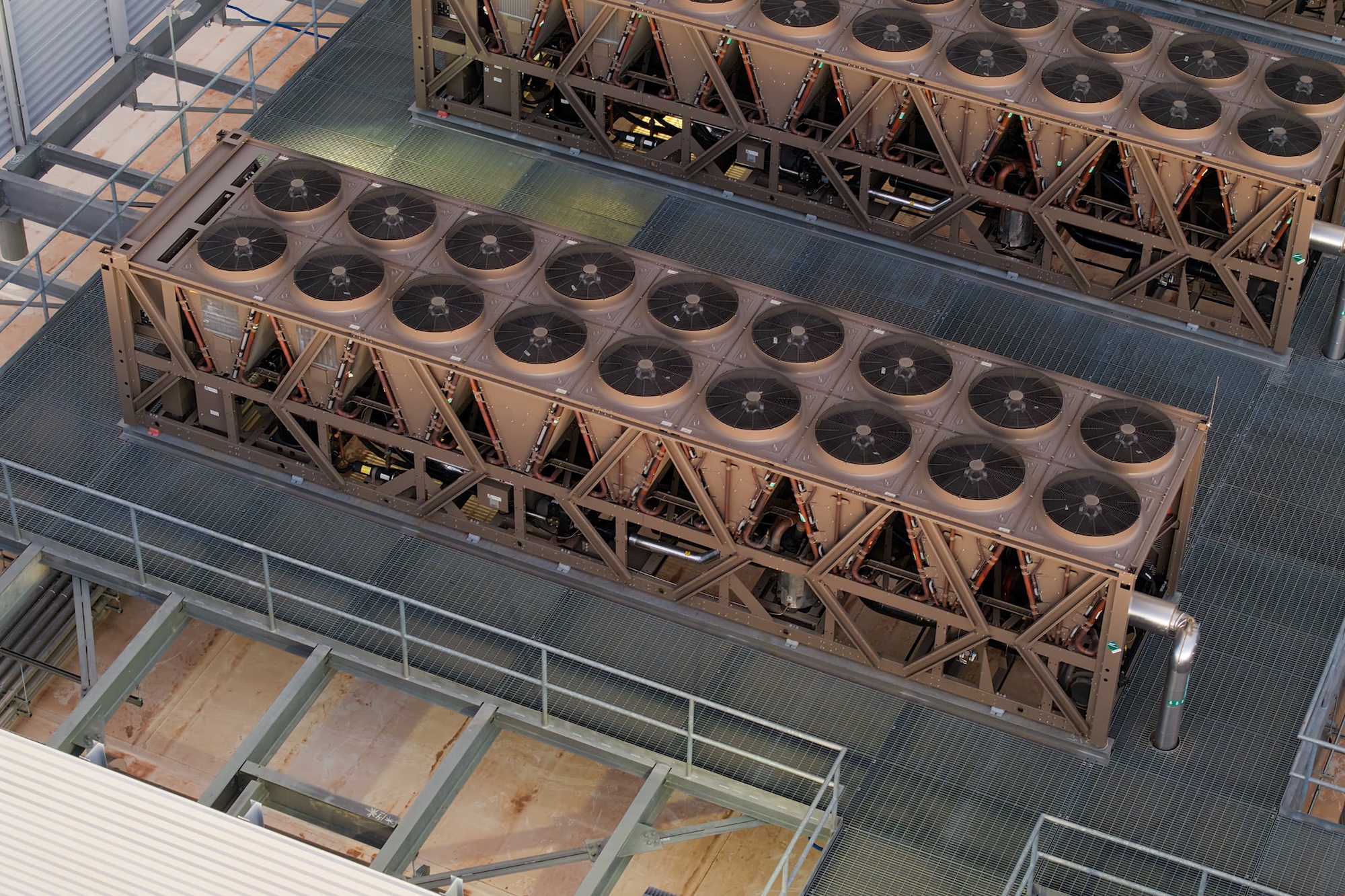
A single data center can push those temperatures even higher. The waste heat produced by one data center is roughly equivalent to 40,000 households or more, 2026 research from ASU’s School of Geographical Sciences and Urban Planning shows. And that heat does not stay in place. It travels.
A data center can raise temperatures in the surrounding neighborhood by as much as 4 degrees Fahrenheit, the school’s peer-reviewed research found.
The implications of Arizona State University’s study on waste heat from data centers
The ASU study is particularly significant because it provides the first precise, ground-level data on waste heat that travels downwind from data centers.
Previously, rough estimates were only available through thermal imaging from faraway satellites and other remote sensors. ASU researchers used air temperature sensors to directly measure heat levels upwind and downwind from four data centers across the Phoenix metro which “reflect the typical design of ‘hyperscalers’ that house many thousands of servers and use primarily air-based cooling systems.” They found hotter air temperatures up to five city blocks away.
“Even if these data centers only contribute to an additional heat island magnitude of one degree or two degrees, that can still have a very significant impact on our lives,” said David Sailor, director of ASU’s School of Geographical Sciences and Urban Planning and lead author of the study, in a statement.
Sailor and his colleagues emphasize this level of impact from waste heat is a “previously undocumented urban thermal hazard demanding attention from the data center and urban planning communities.” They plan to study the effects further, gathering temperature data across a wider range of times and weather conditions.
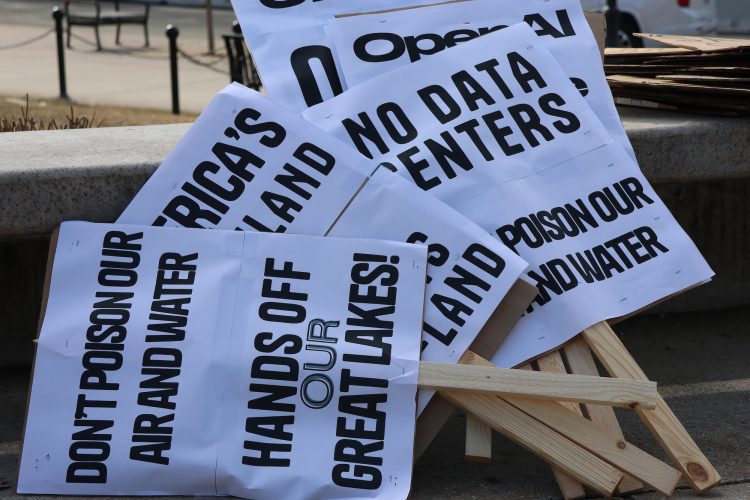
The potential for previously unknown impacts is among the driving factors behind a wave of data center moratoriums across the country as regulators scramble to catch up to the pace of development. Local policymakers and citizens have also raised the alarm over air pollution from data center backup generators, as well as noise disrupting previously quiet neighborhoods and stress on municipal water systems. Increased power demand from data centers is also partly driving the rise in local electricity rates, adding to the stress on financially burdened households.
The firm Connected Capital is tracking 399 local data center moratoriums in various states of progress across 44 states, in addition to 32 bills among state legislatures.
The push for urban data center standards is global
In the absence of strong state or federal guidelines, ASU’s research further underscores the need for jurisdictions in the Phoenix metro to take stronger regional action on urban heat islands.
The need for regional collaboration is also evident in the many U.S. cities where permitting decisions are made by administrative staff relying on outdated zoning regulations, without a vote from elected officials. In Colorado, for example, a data center in the city of Aurora has been quietly winding its way through the permitting process. If successful, the new facility — including 28 emergency diesel generators — will be located within a residential area.
After the proposal came to public attention, Aurora residents mobilized to flood the city council meeting earlier this week. Residents aged 16 to 86 shared three hours of public comment on what would be the state’s largest data center.
“I’m here speaking for the other at-risk neighbors in the audience and at home, and surprisingly enough, I’m also speaking for your future,” Dan Bergander, a resident of a local senior housing community, told council members on Monday. “You on city council will one day settle into retirement and I certainly hope you’re not betrayed by developers and government officials.” The room broke out into applause as he finished, Sentinel Colorado reports.
U.S. cities are also reaching out to counterparts elsewhere around the globe to develop principles that guide urban data center development on a more sustainable path. The Global Urban Data Centres Pact, formed earlier this year in partnership with the urban advocacy organization C40, already includes 42 members around the world, including Phoenix and 20 other U.S. cities.
The Pact falls well short of halting urban data center development entirely. Instead, it operates as a clearinghouse for best practices and case studies that help city planners and residents set standards to shield communities from undue impact, citing the new Phoenix zoning ordinance as one example.
In addition to zoning upgrades, climate-safe solutions are an area of focus. The Pact calls for clean power, water conservation and waste heat recovery at data centers and challenges developers to invest in local infrastructure and engage with local communities.
As for effectiveness, the real power behind efforts like the Global Urban Data Centres Pact sits with the public. Here in the U.S., a sharp rise in grassroots activism has compelled some developers to revise their plans or cancel projects altogether, and the rising tide of anger and uncertainty has rippled into the 2026 midterm election cycle. With Election Day coming up on Tuesday, November 3, voters have an opportunity to change the direction of data center development, if not nationally then locally, in their own communities.
Featured image: Wikimedia Commons