
The race to build new data centers to fuel the boom in artificial intelligence is on. Even as tech giants and developers wield considerable political and financial firepower to get new data centers built as quickly as possible, U.S. communities aren’t so sure they want these massive facilities near them. Local organizers across the country are winning some significant victories despite the uneven matchup.
More data more problems, communities say
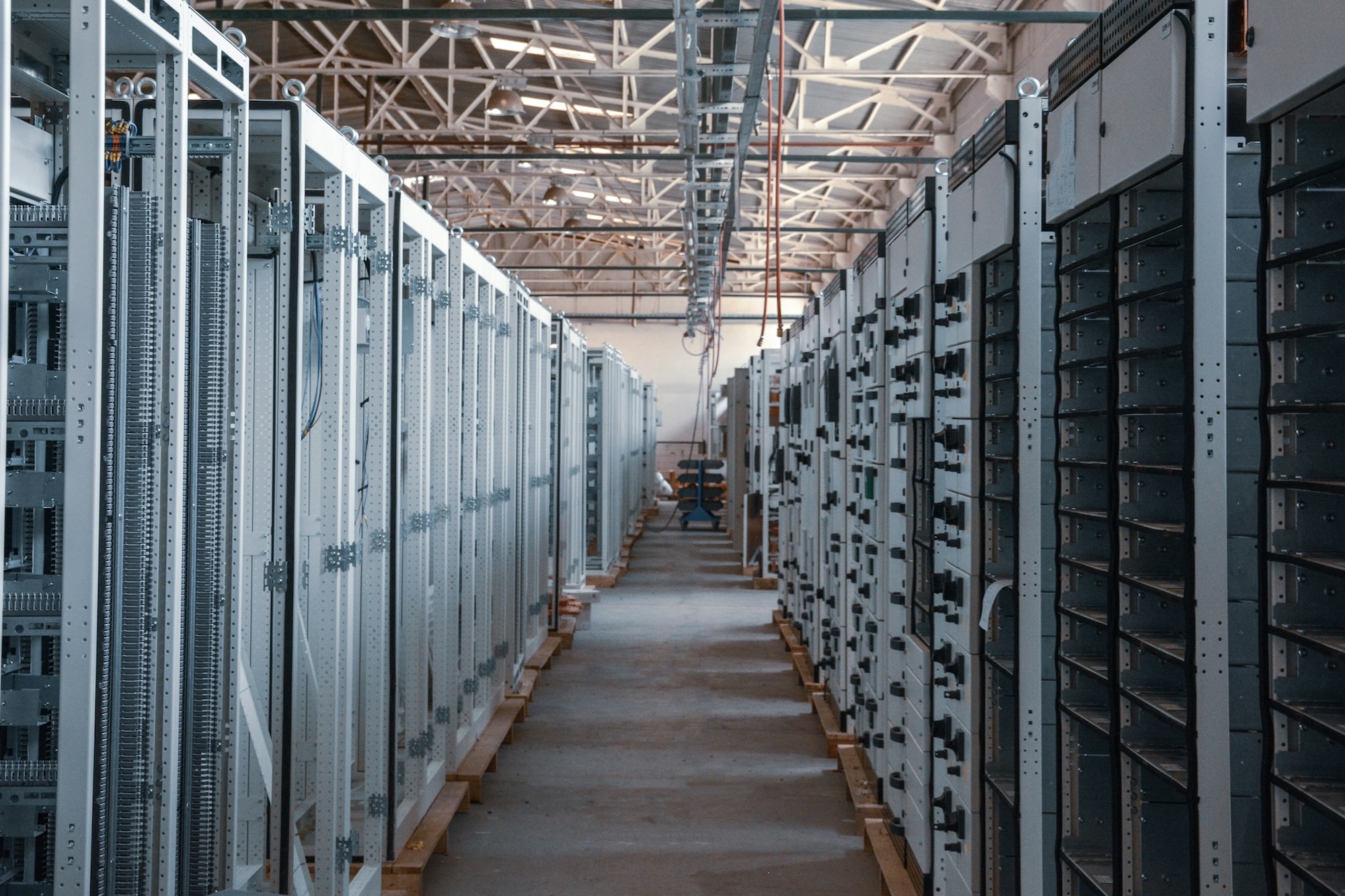
The first server rooms appeared in the 1940s at the dawn of the computer era, but we’ve come a long way since then. More than 4,000 data centers are now in operation or under active development in the United States. While some are relatively small facilities dedicated to particular businesses, artificial intelligence (AI) computing requires massive “hyperscale” data centers, and an equivalent amount of energy.
The energy consumption of U.S. data centers has more than doubled since OpenAI launched ChatCPT and is expected to more than triple from 2021 to 2030, according to the International Energy Agency. U.S. data centers used roughly 134 terawatt-hours (TWh) of electricity in 2022, more than three times the annual usage of New York City. This figure is expected to reach a stunning 426 TWh by 2030.
As more data centers are built to meet the growing demand for computing power, people across the United States are raising the alarm about what this actually means in their communities.

Because the large new loads are often subsidized by local ratepayers, data centers are a driving cause of rising electricity rates. A recent analysis by Bloomberg found that wholesale electricity costs increased by up to 267 percent over the past five years in areas with data centers. Using on-site gas generators can lighten the impact on grid-connected ratepayers, but at the cost of local air quality.
Additionally, the heat projected from data centers has been identified as a significant contributor to the “heat island” effect in surrounding communities. A difference of just one or two degrees Fahrenheit can lead to increased air conditioning costs for nearby ratepayers.
Communities and advocacy organizations have also raised alarms over the use of increasingly stressed water resources for data center cooling. Beyond using an average 300,000 gallons of water a day, cooling systems contribute to data center noise, a matter of growing concern for locals. In addition to audible noise in the form of “a constant hum,” “a high-pitched whine” or even “a relentless roar,” professionals in the field have noted concerns over infrasound. Though inaudible to the human ear, exposure to high-intensity infrasound has been linked to measurable impacts on human health, including heart health.
While most of today’s data centers are located near cities, developers are increasingly eyeing rural areas, bringing the disquiet about the community-level impacts of the AI boom into new territory. Pew calculates that 67 percent of the 1,500 new data centers in the U.S. pipeline will be located in rural areas, where they’ll be competing against farmland for electricity and water as well as the land itself.

Organize, organize, organize: Communities push back on new data center construction, from city council meetings to the ballot box
With no specific federal regulations governing data centers and state regulations moving ahead slowly, local organizers are taking the lead in making people aware of proposed projects and encouraging them to ask questions and make their voices heard.
The city of Monterey Park, California, for example, held public meetings on a proposed data center earlier this year. The hearings were small and outreach was limited to adjacent residents. A positive determination was in sight until one attendee asked the local organization San Gabriel Valley Progressive Action to investigate.
The organization, which formed in 2020 as part of the Black Lives Matter movement, mounted a multi-lingual awareness-raising effort about the data center and its potential impact on electricity rates and public health. The campaign included door-to-door contacts, fliers, phone calls and a petition. Organizers also purchased the domain “No Data Center MPK” to help boost turnout for public meetings and support letter-writing campaigns.
Hundreds of residents packed the next three city council meetings. They won a 45-day temporary ban on new data centers, and then a ballot measure for a permanent ban. The developer withdrew its application after the third meeting in March.
Communities are also wielding the power of the vote. In Festus City, Missouri, for example, all four incoming council members successfully campaigned on a platform opposing a new data center. They replaced four incumbents who voted to support the venture.
Lawmakers elsewhere are listening. In March, the economic development watchdog organization Good Jobs First counted at least 12 states and local legislatures considering temporary data center bans in this year’s legislative session. The mix of jurisdictions illustrates how the pressure on lawmakers is cutting across party lines, with Michigan, Minnesota, Pennsylvania and Colorado recently joining the list alongside Georgia, Maryland, Minnesota, New Hampshire, New York, Oklahoma, South Carolina, South Dakota, Vermont, Virginia and Wisconsin.
Other elected officials are considering taking executive action, and measures are under consideration in multiple cities and counties. “It’s a signal that the political system is starting to acknowledge the obvious: hyperscale data centers are huge, fast-moving, and highly subsidized, and states often lack basic economic and environmental guardrails to protect residents and ratepayers,” Good Jobs First summarized.
Public pushback isn’t the only thing slowing down data center development, as it turns out big tech is as susceptible to basic logistics as the rest of us. More than half of all data center projects in the U.S. pipeline have been delayed simply due to a shortage of electrical equipment, with some reporting up to five years’ wait time, according to an April analysis by Bloomberg.

Building the legal case against the most polluting data centers
Some organizations are also deploying environmental law to rein in bad actors. In Mississippi, for example, last week the National Association for the Advancement of Colored People (NAACP) announced a lawsuit against the Elon Musk AI venture xAI and its subsidiary, MZX Tech, charging “unlawful operation of dozens of unpermitted methane gas turbines” at the firm’s Colossus 2 data center in Southhaven.
“The company’s failure to get a permit for its power plant — which is located near homes, schools and churches — creates added health risks for families in North Mississippi and Memphis and is a clear violation of the Clean Air Act,” NAACP’s filing reads. The site already hosts 27 turbines, and an additional 41 turbines are planned for another facility at that location.
The Clean Air Act may be ineffective while U.S. President Donald Trump is in office, but another case in Oregon indicates AI firms are not immune to pollution lawsuits. In a first-of-its-kind filing submitted in March, Amazon agreed to pay $20.4 million in damages to remediate nitrate pollution linked to its Morrow County data center. Amazon denies wrongdoing, but if the settlement is approved, the company will cover the cost of new private wells and improvements to the public water system.

A rising tide of uneasiness and a tsunami of cash
The sudden intrusion of AI into everyday life is another factor contributing to the rising opposition against data centers. Polling indicates a general uneasiness about AI, including concerns over the replacement of human workers. In a 2025 survey from the Jeb E. Brooks School of Public Policy at Cornell University, only 18 percent of respondents said they are “more excited than concerned about AI in daily life.”
Recent polls are more of the same. “A March NBC News survey found 57 percent of registered voters believe the risks of AI outweigh the benefits, and a Quinnipiac University poll reported that 55 percent expect AI would do more harm than good in their daily lives,” CNBC reported last week.
Adding fuel to the fire is rising public awareness — and anger — over the wealth gap and the concentration of money and control in the tech sector. Ordinary households are grappling with high electricity rates and potential job loss while big tech companies make billions from AI growth.
In response to public resistance, legacy tech giants like Microsoft, Amazon, Meta and Google owner Alphabet, along with newcomers like Anthropic and OpenAI, have ramped up their lobbying efforts to remove regulatory obstacles from their path to AI dominance.
In one particularly concerning development, OpenAI lobbied on behalf of Illinois legislation that would limit the liability of AI labs for causing “serious societal harms,” including mass deaths and financial crises. In another, Elon Musk venture xAI sued the state of Colorado to block new legislation aimed at protecting consumers from discriminatory behavior by AI systems used in fields like education, employment and housing.
The reputational baggage carried by tech billionaires like Musk and Peter Thiel, co-founder of the data mining firm Palantir, do little to help the sector’s public popularity. Though Thiel is less in the public eye, both men are known as champions of far-right extremism, and both supported President Trump’s first and second campaigns for office, financially and otherwise. Both are also contributing to state-level campaigns in support of Republican candidates for the 2026 midterm elections, providing the public with additional insights into their tech-centered ideology.
Are we headed for a big tech reckoning?
“The AI boom is fueling a literal and metaphorical power grab by tech billionaires — and forcing a reckoning,” the progressive news organization Mother Jones summarized earlier this month.
The first rumbles of that reckoning have already come for data center proposals in some jurisdictions, where voters and organizers have been quick to make their voices heard. Now that AI and data centers are front and center in the midterm election cycle, voters will have another, more powerful opportunity to take the case for community control of proposed projects into their local legislatures and the halls of Congress.
Image credits: İsmail Enes Ayhan/Unsplash, Yngve Hellström/Wikimedia Commons, Robert Scoble/Wikimedia Commons, Chad Davis/Flickr, BeyondDC/Flickr