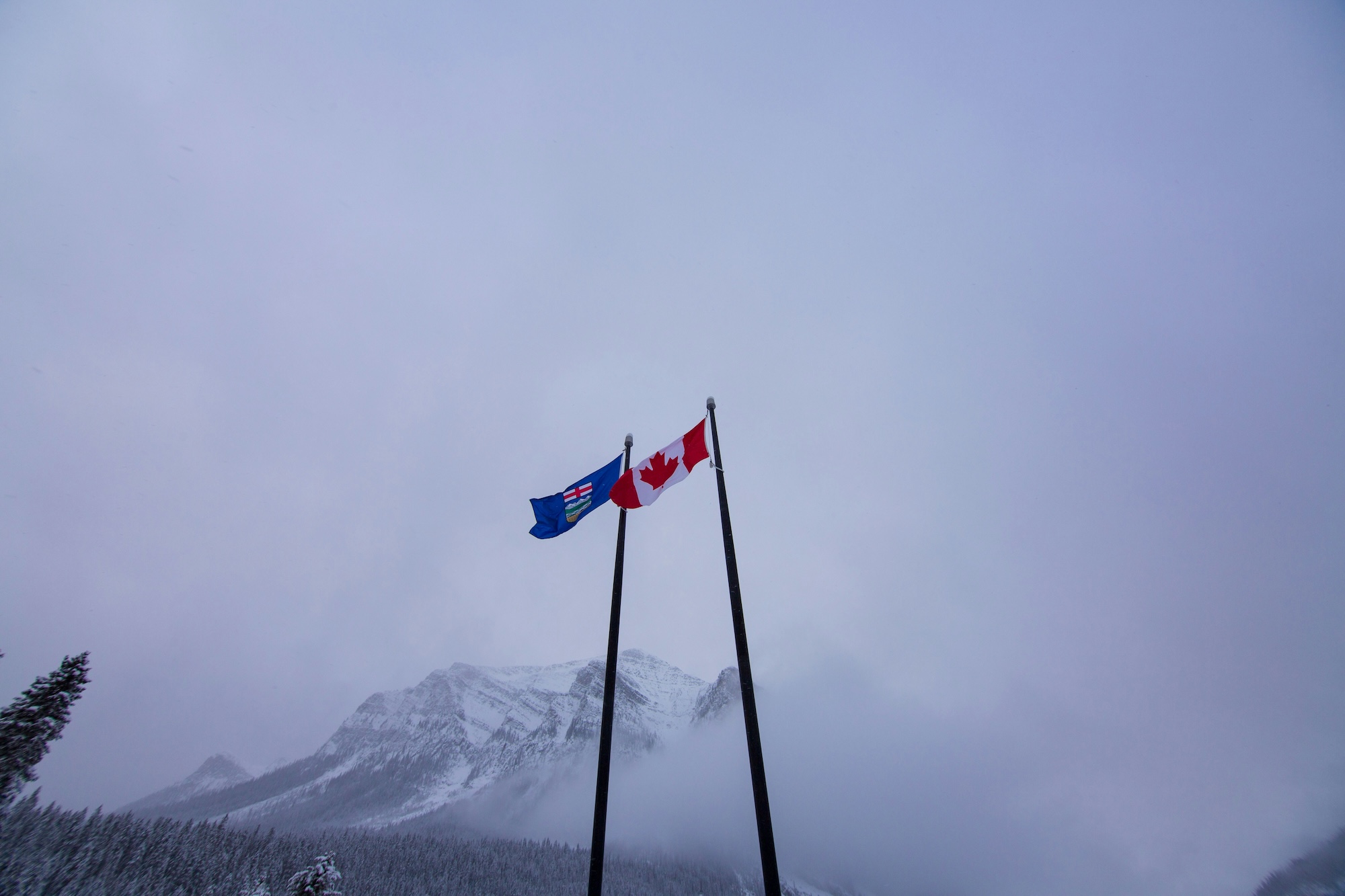

Alberta residents will vote this fall on whether to stay a province of Canada or start the process to become an independent nation. The upcoming ballot referendum brings oil-rich Alberta’s controversial separatist movement from the fringes squarely into the mainstream of public and political conversation. In a headspinning, cross-border development, the separatist fight recently spilled over into an elections scandal with links to the Michigan-based organization 10x Votes, the creator of a voter turnout app that aided United States President Donald Trump’s successful 2024 campaign.
Separatism and scandal
Earlier this year, an official at the administrative agency Elections Alberta watched a leaked training video from a separatist group called the Centurion Project on YouTube. The video showed a Centurion database exposing the personal information of Alberta voters, prompting the agency to launch an investigation, the Canadian news organization CBC reported last month.
The investigation later revealed Centurion’s database was based on an official voter list the organization was not authorized to view or distribute. The leaked list contained the names, addresses and polling station numbers of nearly 3 million Alberta voters in what experts called one of the “most significant privacy incidents” in Canadian history.
Centurion made the database publicly searchable in an app used to gather support for the referendum on independence. For its part, “the organization denies any wrongdoing and said the datasets in its searchable database came from a third party,” CBC reports.
The head of Centurion, David Parker, was served with a summons shortly after the investigation began in April. The app was shut down, and the database is now the subject of three separate investigations by Elections Alberta, the Royal Canadian Mounted Police and the provincial privacy commissioner, The Canadian Press reports.
Links to the Alberta separatist movement stretch across the border
Reporting on the separatist scandal revealed links to the Trump-appointed U.S. ambassador to Canada, Pete Hoekstra, by way of the Michigan-based organization 10x Votes.
Hoekstra repeatedly promoted the 10x Votes app ahead of the 2024 election in his prior role as the head of Michigan’s Republican Party. The app allows users to search a public database to identify, “claim,” and seek to influence 10 infrequent voters in their family and friend circles.
Centurion’s Parker said he worked with 10x Votes over the course of nearly two years to create a version of the app for use in Alberta, later to be named the Centurion Project, the Canadian investigative news organization PressProgress reported.
PressProgress reported Hoekstra is “personally acquainted” with the founders of 10x Votes, two wealthy and well-connected political operatives from west Michigan, though Hoekstra “denies any knowledge” of 10x Votes being used by Alberta separatists.
Two days after the PressProgress story broke, Canada’s National Observer reported that it found voter data from Alberta on 10x Votes’ website. This suggests that, beyond exchanging ideas, 10x Votes deployed data from real Alberta voters to help Parker develop the Centurion Project, the Observer reports.
The editorial board of the Winnipeg Free Press, like many Canadians, have further concerns about the financial links yet to be discovered. “The extent to which American dollars and American help are involved in Alberta politics has to be established,” they wrote. “Foreign nationals helping Canadian separatists is simply not acceptable.”
None of this is good news for Canada-U.S. relations, which are already strained to the breaking point by Trump’s tariff wars, his references to Canada as the 51st state, and his criticism of the NATO alliance, of which Canada is a member. Hoekstra has not particularly endeared himself to Canadians either, having defended the president’s “51st state” insult among other offensive remarks about the nation and its people. Now Trump allies face serious accusations of election meddling in a foreign country.
Predictably, the revelations sparked a major backlash in Alberta and across Canada. News organizations have joined the pressure on Canadian Premier Mark Carney to declare Hoekstra persona non grata, while Parker has reportedly left the country and is not cooperating in the elections investigations.
Wait, why would Alberta want to leave Canada, anyway?
Separatism is a hot-button issue in Canada, with longrunning secessionist leanings in French-speaking Quebec along with the movement in Alberta. While support for separatism in Quebec is primarily rooted in language and culture, the situation in Alberta is something different.
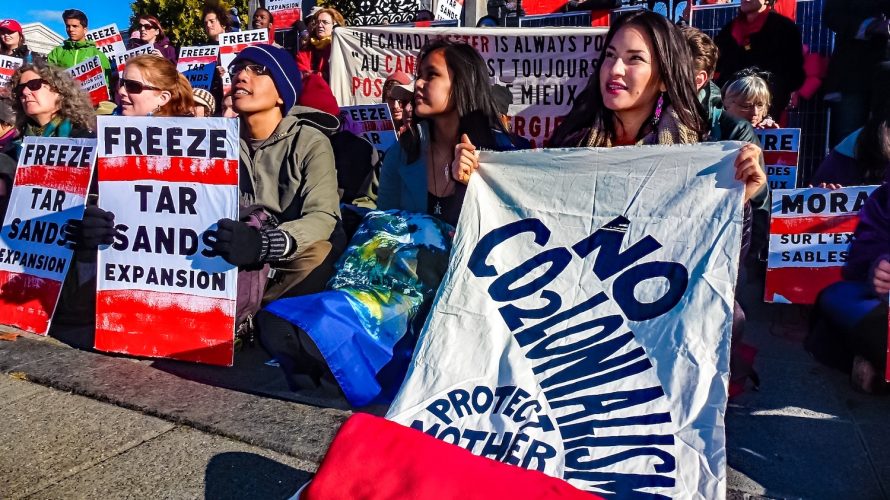
Alberta is home to rich fossil fuel reserves, and resentment over Canada’s climate and economic policies is a driving force behind the province’s separatist movement.
Lena Saleh of the York Center for Public Policy and Law in Toronto recently summarized their viewpoint: “Alberta is perched comfortably atop a mountain of wealth generated from its extensive oil and gas reserves. If liberated from Canada and the shackles of its oppressive transfer/equalization payment schemes, its wealth would remain within its borders, allowing Alberta to simply ‘take care of itself.’ Alberta, in other words, does not need Canada.”
Alberta’s sedimentary rock formations, called tar sands, contain an estimated 167 billion barrels of oil reserves, roughly four times the reserves held in the entire U.S. With a current output of just 3 million barrels a day, the resource could indeed sustain Alberta’s economy for decades if fully exploited.
However, there is a catch. Abundant as they are, Alberta’s tar sands have been described as a “carbon bomb” due to the environmental impacts of extracting oil-rich bitumen from the rock. According to some estimates, two tons of tar sands are required to produce one barrel of oil.

In past years, the carbon footprint and high expense of the operation acted as a check on investor interest in Alberta’s tar sands oil. Opposition to transporting the oil to the U.S. via projects like the failed Keystone XL pipeline is another limiting factor for landlocked Alberta, which sits just across the border from Montana.
But as political tides change, oil interests see promise in new opportunities. That includes an expansion of the Trans Mountain Pipeline originating in Alberta. The controversial project opens up access to ports in Washington state and the Canadian province of British Columbia, provoking outrage from climate advocates while making global export possible for Alberta tar sands oil. Last month, the Trump administration also fast-tracked an environmental review and issued a cross-border permit for the proposed 674-mile Bridger oil pipeline connecting Alberta to central Wyoming, Grist reports.
Though tar sands oil has become more competitive in global markets amid the U.S. war in Iran, it may be a stretch to argue it could support Alberta as an independent nation. S&P, for example, forecasts that growth in oil sands will slow despite the boost of war-related high oil prices, with production likely peaking at 3.5 million barrels a day as early as 2030, Jake Bittle and Naveena Sadasivam of Grist observed.
Earlier this week Alberta Premier Danielle Smith dropped an even bigger political and financial bomb on the separatist movement in the form of a cost estimate for establishing Alberta as a fully functioning, independent government. As reported by the Calgary Herald, the calculation comes to approximately $80,000 for each resident, each year, for an annual total of almost $400 billion.
Smith seems confident the information will encourage Alberta voters to reject separatism in October. If the referendum does fail, it will stand as yet another humiliating, high-profile defeat on the world stage for Trump and his allies, who already face a hostile electorate in the run-up to the U.S. midterm elections in November.
Feature image credit: CJ Toscano/Unsplash