



Skilled use of artificial intelligence is a major point of differentiation in today’s job market, but there’s a gap between the AI skills new graduates have and the skills employers are actually looking for among incoming hires.
More than half of employers say it’s a challenge to find new graduates with the right AI skills, and only around a quarter think universities are keeping pace with AI-driven changes to the job market, according to 2026 polling from Pearson.
This new reality challenges educators to expose young people to AI and help them build in-demand skills, without shifting their academic careers into autopilot.
Experts agree students must be taught to effectively and responsibly use AI, and many organizations are turning to tech companies to help them bring real-world AI into the classroom.
“Schools have to get rid of the fear of students using AI because they’re concerned about cheating,” said Robert Vaughn, chief innovation officer at NPower, a nonprofit organization that’s helped over 12,000 young people with free career training. “We certainly need to teach the ethics of using these tools, but we also need the type of curriculum where students can get AI exposure, learn and demonstrate evidence of that learning.”
NPower is among the U.S. workforce development organizations to receive grant funding from the Everpure Foundation, the corporate foundation of the data management company Everpure, to help prepare young people for the ways AI is impacting early career pathways.
“The anxiety I keep hearing is that AI is coming for entry-level jobs. I see this moment almost exactly the opposite way,” said Niki Armstrong, chief administrative and legal officer for Everpure. “It isn’t a threat to their place in the workforce; it’s one of the reasons we need them in it.”
We spoke with workforce development leaders about how they see AI impacting early careers, what that means for young people, and what organizations in the education and career readiness space can do to respond.
AI’s impact on the job market
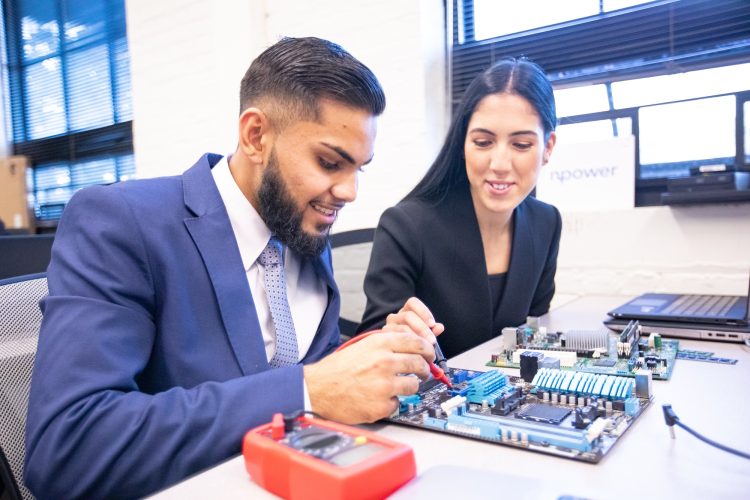
Exactly how AI will impact the entry-level job market is a story that’s still being written. On one hand, AI can automate a lot of tasks that junior employees would typically perform. At the same time, AI has made technology more accessible for businesses, and employees are needed to manage those systems.
A recent report from the Strada Education Foundation found the companies that have integrated AI into their systems are likely to have more entry-level opportunities.
“Smaller companies and businesses that couldn’t afford enterprise-level software before can now automate with AI,” said Ruthe Farmer, CEO of the Last Mile Education Fund, which invests in degree completion among financially-vulnerable college students pursuing tech-related degrees. “If more companies of different sizes are able to leverage technology to create automations and efficiency, that means more people need to manage those automations.”
Many of the entry-level jobs in the AI era, however, require a different set of credentials than entry-level positions did five years ago.
“We have some companies like IBM that are increasing the number of roles available,” said Sue Harnett, CEO of Rewriting the Code, an organization that assists women in tech through university and their early careers. “Then we have other companies that have stopped hiring interns and new employees and have shifted the focus to PhD students.”
Education systems need to prepare students for the real world
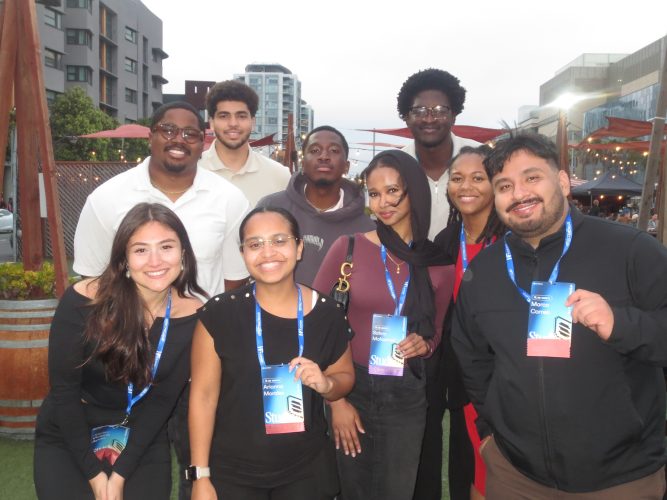
To prepare more young people for the in-demand skills they’ll need in the workplace, schools need to embrace AI in the classroom, experts said.
“When AI burst onto the scene in 2022, our leaders didn’t know how to respond to it in schools,” said Dwana Franklin-Davis, CEO of Reboot Representation, a business coalition committed to the success of underrepresented youth in tech fields. “In New York City, they banned it because they wanted to make sure that students weren’t cheating, and that was the wrong thing to do. We should teach young people to be responsible with it, have critical thinking skills and leverage it to enhance their efforts.”
For example, starting this year in Denmark, a country known for its progressive education system, students will have to orally defend essays that were written at home. It’s a sort of tacit agreement that AI can be used as long as students can defend and understand the conclusion of the arguments in their work.
“A student should be able to use AI as a resource, demonstrate the thinking and prompting that went into their work, critically evaluate what AI produced, develop their own conclusions, and then defend those conclusions both verbally and in writing,” said Vaughn of NPower. “I see this as the natural evolution of education in an AI-enabled world.”
Tech companies need to support education systems
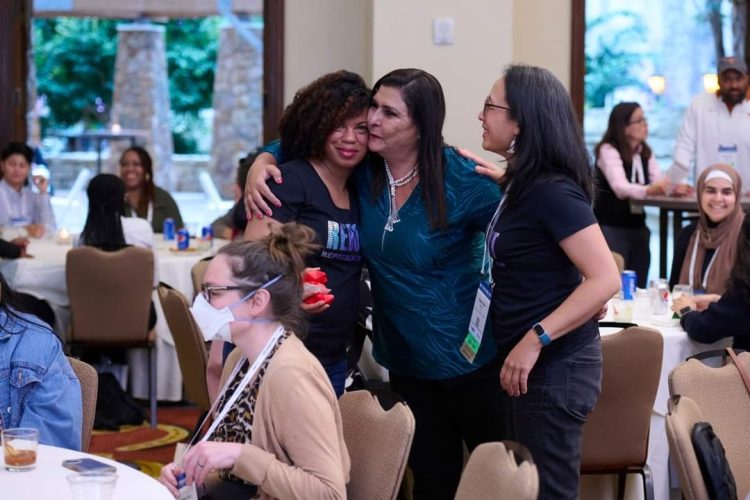
If educators are going to embrace AI in the classroom, they need to align with the skills that industry needs. These might be technical AI skills, but it also includes human durable skills like analytical reasoning, emotional intelligence, communication and problem solving.
“I had this conversation with one of our recruiting partners. They said we really need the younger employees to understand how to work in a team, how to form a relationship with their manager, and how to work on their career trajectory,” said Harnett of Rewriting the Code. “I think because of the hybrid or remote learning situations over the past several years, the behavioral talents that are just as important as the academic talents are behind.”
Experts pointed to business internships and on-the-job training as hugely influential in closing skills gaps, though these positions have disappeared at a number of companies in recent years.
“In order for companies to meet or exceed growth goals, they must start creating these workforce pipelines,” Vaughn of NPower said. “Part of that can be partnering with workforce development organizations like us to get students experience before we pass them on to become potentially full-time employees.”
NPower partners with employers and industry leaders that provide real-world problems for students to solve. It’s part of what NPower calls blurring the line between the classroom and the workplace so students can gain real-world experience in the classroom and have a smooth transition into their careers.
Everpure is among the tech companies that understand the powerful role the private sector has to play in educating and preparing young people. “If new hires arrive already knowing how to use the tools, our job is to teach the part the tools can’t supply: judgment,” Armstrong of Everpure explained. “When to trust an answer and when to interrogate it.”
As AI is used in more and more complex ways, discernment is another one of those soft skills that employers value and one Everpure focuses on closely with new young hires.
“This raises an equally important question for universities, law schools, medical schools, and every institution preparing people for professional life: Are we teaching young people how to recognize the moment when human judgment has to step in?” Armstrong said. “I don’t want a machine making a medical call or deciding a court case on its own. I want people using extraordinary technology who also know how to poke holes in the seemingly perfect answer and challenge the assumption underneath it.”
Access to education is more important than ever
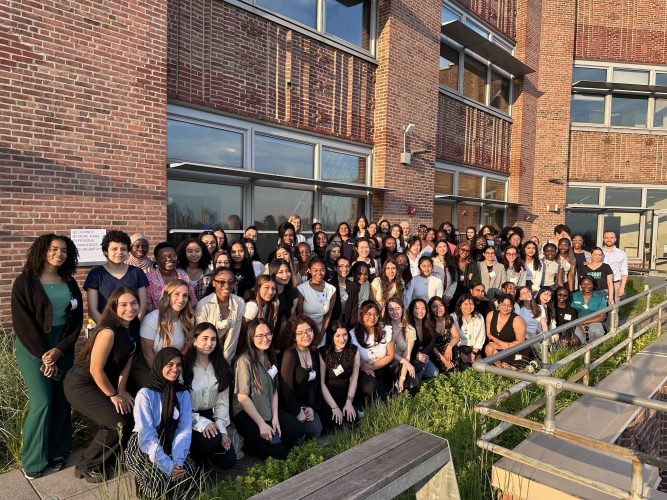
Though AI is an equalizer in many ways, ensuring access to people historically underrepresented in tech — including women and girls, low-income students, and people with nontraditional backgrounds or degrees — helps the sector source top talent while disrupting old patterns of exclusion, experts said.
“Access to education is as important as it’s ever been,” said Harnett of Rewriting the Code, which has helped over 50,000 young women pursue tech careers. “Otherwise, the gap is just going to get larger between those who can access the courses or experiences and those who can’t.”
As AI brings major changes to early career pathways, each of these workforce development leaders say their teams are doing their best to adapt on the go. But they need support from government, industry and the whole education ecosystem to provide all students an opportunity in the new AI-integrated landscape.
“It takes a village to move this needle forward,” said Franklin-Davis of Reboot Representation, a coalition of tech companies including Everpure that support underrepresented youth in tech fields. “No one organization can do it alone. We have to be intentional about collaborating, communicating and working together so we can enhance each other’s efforts.”

